
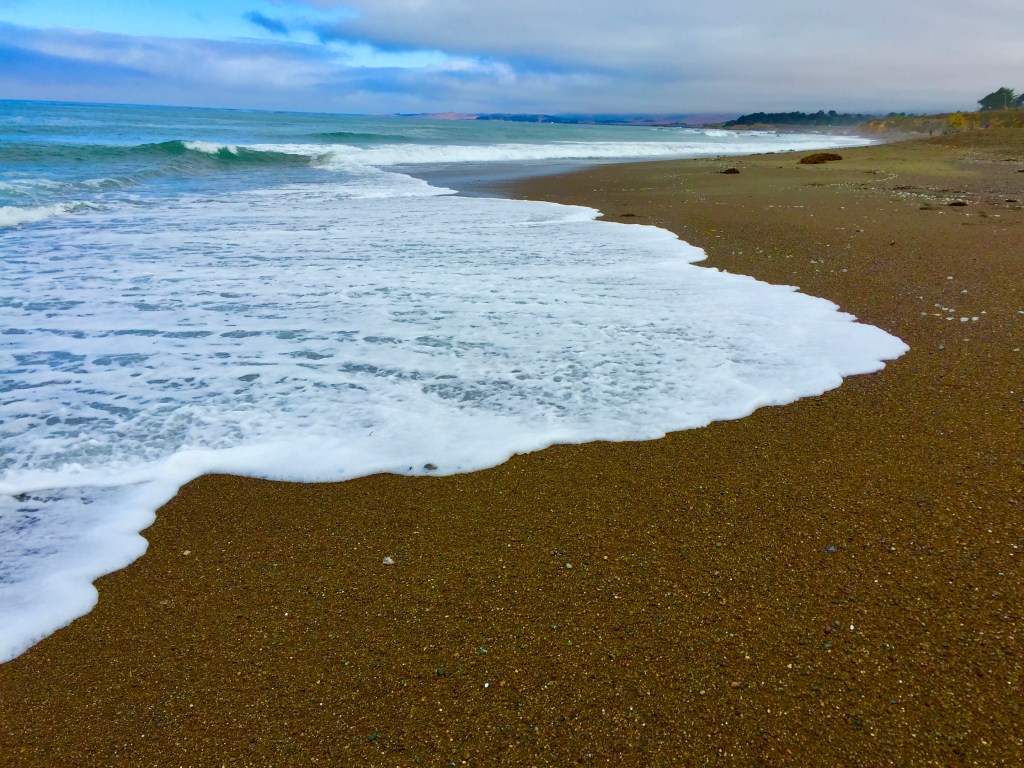
Recently, my husband and I made a day trip to the beach. It had been too long, and a lot of loss had occurred in our lives since our last visit. I can tell you that getting my feet on the sand and back in the water was long overdue! The beach has always been a place of solace and comfort for me. It is where I feel most connected to myself, to nature, and to the One who created it all. I feel God’s Spirit all around, and He speaks to my heart in ways that bring new perspectives and realizations. It is where He soothes my broken heart or wraps His arms around me in my grief or trouble. I can stand there for hours just listening to the sound of the waves as they tumble onto the beach around me. We all have places like this, places that touch our hearts and still our souls long enough for the noise of this world to fade into the background so that we can hear or see what we NEED to hear or see.
This life can be so complicated and layered. There is so much going on around us all the time. It is a frenetic pace and, if we aren’t careful, everything within us takes on that pace and the chaos that comes with it. We get so used to the noise of living that we forget how to actually live. The endless distractions or things clamoring for our attention manage to absorb our time and energy. It becomes the “norm,” and we don’t even recognize it anymore. We have endless and continual information rushing at us like an unstoppable tidal wave of distractions, tearing up everything in its path. As people of faith, we can get so caught up in trying to keep up with the pace and then we wonder why we struggle to feel connected to our Father. I can’t help but think of how He tells us, “Be still and know that I am God” (Isaiah 46:10). If I want to truly know Him and be confident in who He is and how He moves, then I must become still.

Being still is not an easy thing to do these days. Not only do we struggle for time in our schedules to do so but becoming still actually stirs movement in other ways. As a child of God, it is almost impossible to sit quietly for very long before we start to reflect, and when we reflect, our spirits turn to the One who created us, redeemed us, and lives within us. We hear the still, small voice within and sometimes it reveals things we need to change. Other times, it reveals truths we couldn’t see or hear in the cacophony of our daily lives. Noise can drown out so much, and as our world continues to become faster and faster, it is so incredibly important to slow down so that we can truly hear, see, and feel those profound things that He desires for us to understand.
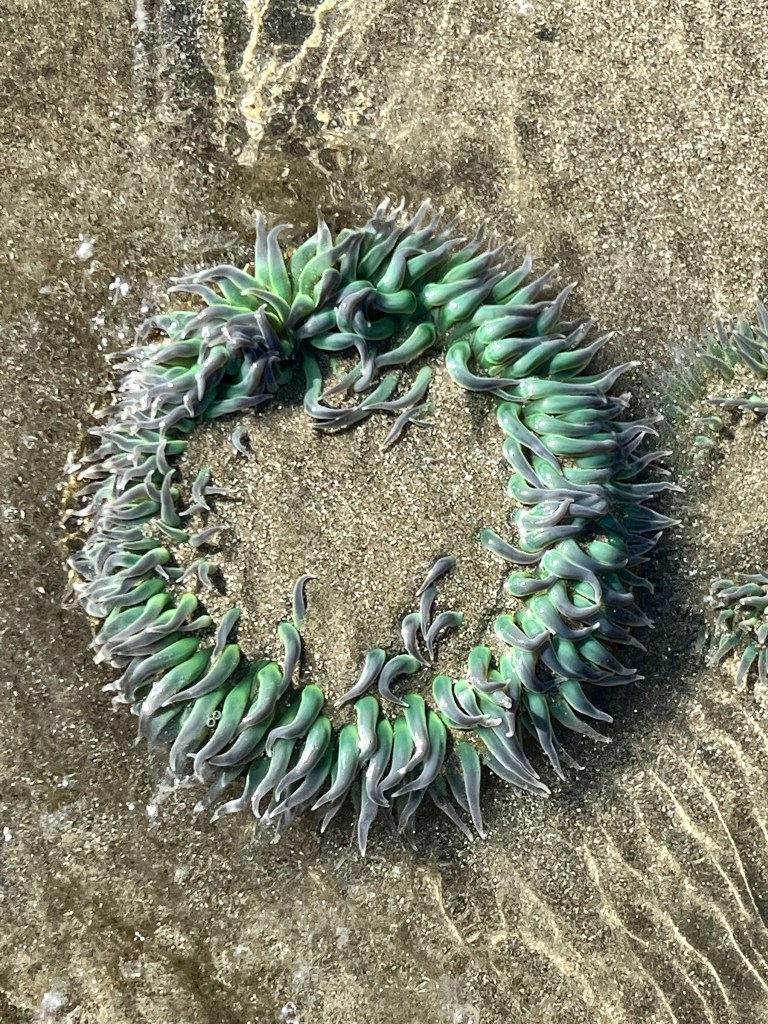
Standing on the sand recently, with the waves lapping around my feet, I found myself back in that old familiar place. I found the stillness in every fiber of my being and the world began to make sense again. I’m not saying that situations in my life suddenly changed, or griefs I’ve had were suddenly gone, but rather that my perspective lifted higher, and I could breathe again. I love to stand and see what is revealed as the waves recede back into the sea. Beautiful shells or rocks appear, and they shimmer in the sunlight as it dances across their surface. Incredible sea creatures, different and colorful, stretch out into the warmth around them and provide a glimpse into the intricacies of God’s creation and the depth of his unending creativity. I don’t think twice about the fact the waves are constantly rolling back into the sea because there is beauty in what lies upon the sand as a result, things I may have never seen otherwise. These moments center me, and it wasn’t until after we returned home that something struck a chord in my heart so strongly that it reverberated through my mind.
There are times in life, certainly in mine, where I feel God’s presence all around me. Sometimes it comes through time spent in nature, with family, or in the embrace of a friend; sometimes it comes while standing with other believers, praising Him in song or sitting together as His family, spending time together with Him. But there are also times when it seems like maybe He’s not as near or that I have somehow lost my ability to hear Him, yet He has promised that He never leaves nor forsakes us. He is still with us as an endless sea of love that does not disappear, but rather ebbs and flows around us. There is a beautiful rhythm in the way He moves in our lives, sometimes seemingly nearer than others, but if we spend our entire life being so focused on watching the waves recede, we will never turn our vision to what is revealed when they do so. We will miss some of the very things our Father is trying to show us. He doesn’t recede to abandon; He recedes to reveal!

I am constantly amazed at how He speaks to us as His children. He finds ways to meet each one of us where we are, in whatever place we find ourselves at any given point in time. He knows exactly the language to speak that will open my heart, my ears, and my eyes so that I can find peace and understanding – not in having the answers, but in knowing that HE does. Those “languages” could be in images or scenes that come to mind, an impression of His voice within, the laughter and love of family or friends, or countless other things through which He speaks to us but make no mistake about this: If you are His child, He is speaking to you and your heart. The best way to hear Him is to be still and listen.
Whether you find yourself in times of sunshine or rain, abundance or want, joy or grief, remember you are never alone. Your Father, the One who loves you most and sacrificed Himself to make a way so that He could be with you again forever, is with you always. He knows exactly where you are and how to reach you…and He will never let you go.
Blessings!



 When God delivered Israel out of their bondage in Egypt, He intended for them to inhabit the Promised Land. The journey from where they were to where they were going was an 11-day journey (Deuteronomy 1:2), and yet it took them FORTY years to make it (Numbers chpt. 14). They wandered around in the desert for 40 years because they did nothing but murmur and complain at almost every turn. In Numbers chapter 14, God even said, “How long will these people treat me with contempt? How long will they refuse to believe in Me, in spite of all the signs I have performed among them? How long will this wicked community grumble against me?” God goes on to say He was going to destroy them, but Moses interceded and asked Him to spare them. God agreed to spare them, but then said not one of those who murmured and complained against Him would see the Promised Land. The consequences these people experienced as a result of their complaining cost them far more than they would have ever expected, and an 11-day journey became one of 40 years. God still took care of them during their 40 years of wandering, but it could have all been over much sooner, if only for a change of perspective.
 God tells us over and over to be grateful, but He also tells us to stop complaining! Philippians 2:14 says to do all things without grumbling or arguing. Ephesians 4:29 says, “Do not let any unwholesome talk come out of your mouths, but only what is helpful for building others up according to their needs, that it may benefit those who listen.” There are many other verses that tell us to speak words that lift up and encourage, not tear down and destroy, and even with all of this knowledge of what God expects from us, we just don’t seem to be able to stop the grumbling. We can’t seem to let go of criticizing others around us for not responding to things like we think they should. We walk around thinking our way is the best way, and eventually it diminishes our ability to actually listen to the people around us. You’ve probably heard the saying, “God gave you two ears and only one mouth, because you should listen twice as much as you speak.” We are losing the ability to listen for the purpose of truly hearing, and it is harming us and our society.
 We all have situations in life that are extremely difficult at times. We deal with all kinds of problems and challenges, some that are gut-wrenching or heartbreaking, and it’s easy to see why we might fall into a perpetual state of complaining. When we are hit with trouble from every side, it’s hard to keep pressing forward or even to hold to our faith while standing still. Romans 4:8-9 reminds us, “We are afflicted in every way, but not crushed; perplexed, but not despairing; persecuted but not forsaken; struck down, but not destroyed.” That sounds encouraging, but the truth is, in the heat of our troubles, we don’t believe those words are true. Not only that, it feels good to complain! It really is true that misery loves company. We’ve elevated complaining to an art in our society. We’ve become a people who actually tries to “one-up” each other in the difficulty of our circumstances. It’s like we wear our troubles as a badge of honor! We’ve all known people who seem to only have words of negativity about themselves or others around them. They are the ones always looking to gossip or share negative things about someone else, often in an attempt to make themselves look better or seem more important. We’ve known people who complain or grumble in order to look more like a martyr for doing something. We’ve known people who also live like Eeyore with a “poor, pitiful me” mentality. As people of faith, when are we going to wake up?! When are we going to admit that our complaining comes not just from a place of feeling slighted by others, but by believing we have been slighted by God (though we probably wouldn’t admit that out loud)?
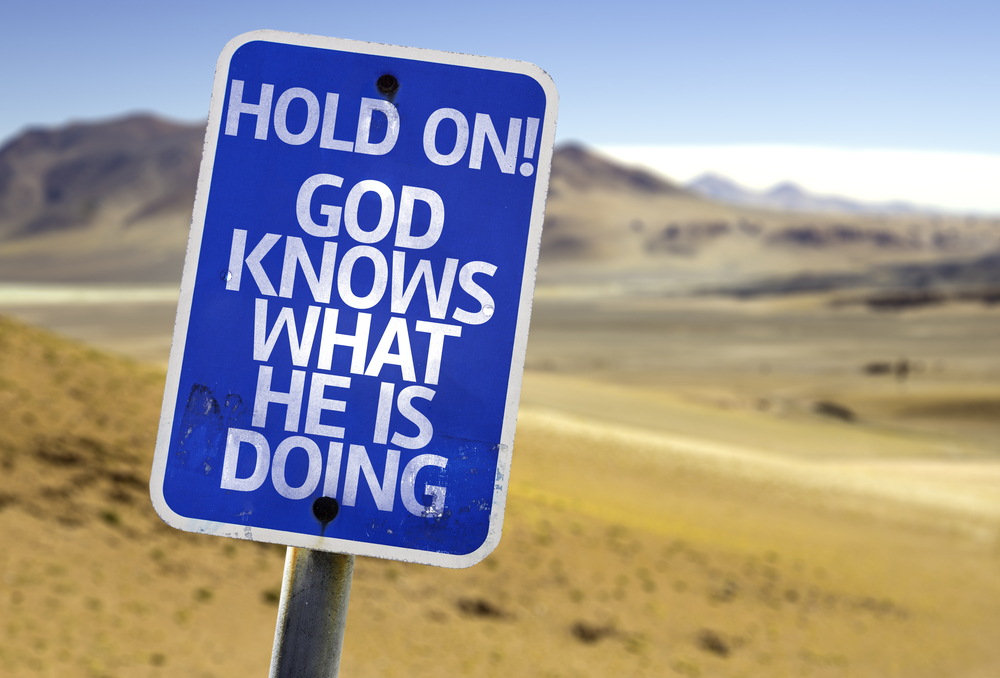 This world is in need of joy; WE are in need of joy. That means we also need each other! We need to focus on loving each other and helping each other, rather than “wallerin’ around in our troubles” (and yes, I just used the word “wallerin’”). When we complain, we end up cutting off support we would otherwise have, because people don’t usually want to be around a complainer. More importantly, it grieves God to hear us continually complaining about our lives. He loves us and has promised He is working everything out for our good. He just wants us to trust Him because He sees a much bigger picture than what you or I can see. So often, we are just like the Israelites wandering in the desert, complaining about where or how God is leading us. I don’t know about you, but I don’t want to risk wandering around in my own personal wilderness for 40 years, when I could have walked through it in 11 days by trusting God, focusing on the good, and simply biting my tongue. Lord, instruct my tongue with a word to sustain the weary, and waken my ear to listen like one being taught!
 For years, California has been in a historic drought. This week we have been hit with torrential rains which have caused all kinds of issues, including flash floods in many areas. Weather events can bring all kinds of challenges and even destruction, but that’s not the point of this particular post. Instead, I want to talk about an idea I call “spiritual irrigation.”
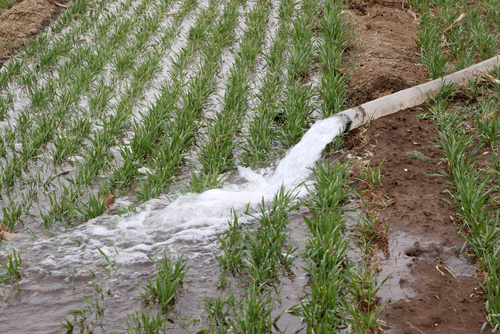 Irrigation allows us to be more in control of our destiny. We can plant crops where they wouldn’t normally thrive because we have found ways to transport water from one location to another in ways it wouldn’t occur naturally. Irrigation certainly requires less reliance on God to provide the rain we need – or think we need. We have gotten so used to doing things our way that we forget the source of our blessings. We start thinking we are truly in control of something as basic as water itself. Oh sure, we pray for God to bless us with rain but if we get too much, we start to complain. After all, we’ve been watering our crops and now that it’s raining, there’s too much water! We wring our hands and wonder what we are going to do. We’ve all seen buildings (or cities) built in areas where there is little doubt they will be flooded or even washed away if there is a lot of rain. We actually criticize people in these areas and say, “well what did they expect? They built in the middle of a flood zone.” But why? Because the rains don’t always come and after a while, no one actually believes they will.
 I am tired of being a “spiritual irrigator,” and my definition of a drought is probably much different than God’s. I want to live with a faith that follows God’s leading and trusts Him to provide the rain. When we shed our need for control and put on that cloak of trust, we get to experience the most amazing moments. We get to dance in the rain because we know from where it came. We start seeing God’s providence instead of looking at Him as if His ways are interrupting our great plans. From our perspective, it is better to plan and execute rather than follow and trust. But from God’s perspective, it is far better to simply trust Him for everything we need and then dance in the rain when it falls.
 Hate. Anger. Turmoil. It seems we are surrounded by it constantly these days. We could attribute it to recent tragedies or the political season, but I think it’s more than that. We are a rich country. I’m not saying everyone is rich, but even the poor in our country have access to more food, shelter and services than many other places. Here’s the thing about prosperity: It’s easier to have more time on our hands, and when we have more time, we have the choice to think about the blessings in our lives or all of the things that are not as we would like. We have more time to think, and yet our thoughts don’t always rest on what the Bible tells us in the book of Philippians: “Finally, brothers and sisters, whatever is true, whatever is honorable, whatever is right, whatever is pure, whatever is lovely, whatever is of good repute, if there is any excellence and if there is anything worthy of praise – meditate on these things.” (Philippians 4:8) Instead, it seems our thoughts go to those things that are more selfish and divisive.
 I am a white, conservative, heterosexual Christian. I also have friends and loved ones who are of all colors, religions, backgrounds and creeds. I love them all equally. I may have more in common with some, which leads me to spend more time with some, but I do not love them more. As a result of my perspective on love, I have some very deep and meaningful relationships with people that others may not understand. Some would even say I should not have these relationships based on my own “classifications.” What a load of crap! I would not turn my back on those relationships simply because we have different opinions or perspectives. Even the people I encounter and find extremely difficult to even tolerate (let alone love), I am still to love them. Loving as God has commanded means that I will love others and see them as God sees them. And in God’s eyes, they mean so much to Him that they are worth dying for! Do I always succeed at that? Sadly, I do not. Like many of you, I struggle to not get caught up into the anger that comes as a result of one side or another (on any issue) becoming belligerent, uncaring and unloving – even if I might agree with their actual position. Everyone likes to point the finger at others and say they are the “judgers,” but everyone shares that trait in common! Everyone is a hypocrite at one point or another. As a result, we end up living lives that are not abundant. We stress and fight and get tied up in knots internally over the issues that face us, while at the same time God is looking at us saying, “Come unto Me all you that labor and are heavy laden, and I will give you rest.” (Matt 11:28) God wants us to rest! He wants us to rest because resting from our labor should be refreshing. When we get quiet, our minds should turn to Him and to a true reflection of ourselves – not the image we try to portray to others.
 After the recent Orlando tragedy, there are a lot of “love wins” quotes once again being circulated. I realize that phrase has been used for one particular cause, but the reality is that truest love DOES win – the love of 1 Corinthians chapter 13 DOES win! It wins because it will cause us to be honest with ourselves and take off our masks so that we can see ourselves for who we are. It allows us to face the truth of Matt 7:3-5 that says, “Why do you look at the speck in your brother’s eye but do not notice the log that is in your own eye? Or how can you say to your brother, ‘Let me take the speck out of your eye,’ and behold, the log is in your own eye? You hypocrite! First take the log out of your own eye and then you will see clearly to take the speck out of your brother’s eye.”
  The Cadence of My Soul